Zelensky’s “Groundhog Day” Speech: The Moment Europe’s Biggest Ally Finally Snapped
Zelensky finally snapped. At Davos today, he called Europe “lost” and compared its response to Groundhog Day. Hours later, France seized a Russian tanker - the eighth Western seizure out of 600 shadow fleet vessels.
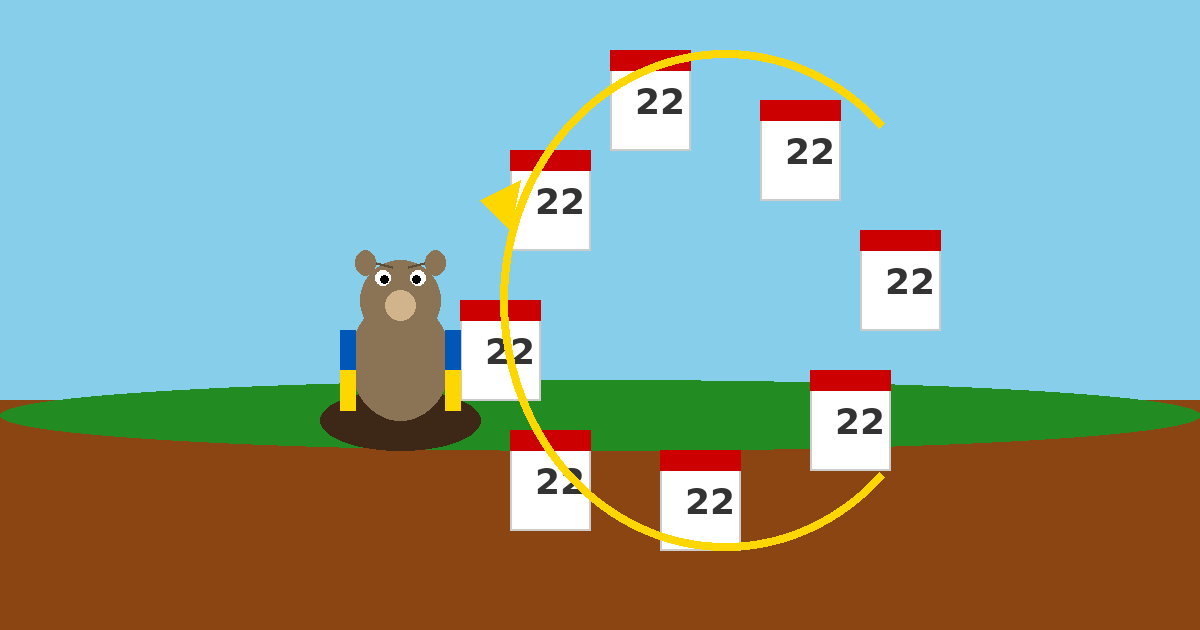
There’s something almost painful about watching a man who’s been begging for help for four years finally lose his patience on a public stage. That’s what happened in Davos this morning when Volodymyr Zelensky delivered what can only be described as a diplomatic intervention, not at Russia, but at his own allies.
As someone who translates Dutch coverage of European affairs for an international diplomatic audience, I’ve watched Europe debate, deliberate, and delay on Ukraine for nearly four years. Zelensky just said out loud what anyone paying attention has been thinking: Europe is stuck in an endless loop of its own making.
He called it Groundhog Day. He’s being generous.
What Zelensky Actually Said
Let me be direct about the speech: this wasn’t diplomatic frustration dressed up in careful language. This was an ally telling Europe it has failed, in front of the world’s business and political elite.
“Europe looks lost,” Zelensky said. Not struggling. Not challenged. Lost.
He described the continent as “a fragmented kaleidoscope of small and middle powers” that “still feels more like geography, history, tradition, not a great political power.” Ouch.
The Greenland comparison was particularly brutal. While EU leaders spent the past week in a panic over Trump’s threats to Danish territory, deploying symbolic troop contingents of 14 or 40 soldiers that accomplish nothing militarilyKyiv continued to face Russian missiles without adequate air defence.
“If you send 14 or 40 soldiers to Greenland, what is that for?” Zelensky asked. He knows the answer: optics. The same optics-driven response that has defined Europe’s approach to his country since 2022.
The Question Europe Can’t Answer
Here’s where Zelensky got truly uncomfortable for Brussels: “Why can President Trump stop tankers from the shadow fleet and seize oil, but Europe doesn’t?”
That’s a damning question. Since December, the United States has seized seven Russian shadow fleet vessels near Venezuela. Europe - with hundreds of these tankers passing through the Mediterranean, Baltic and North Sea - has seized precisely one. Today. Hours after Zelensky called them out.
Russia’s shadow fleet consists of roughly 600 aging tankers that circumvent Western sanctions by flying false flags from Comoros or Panama, switching off transponders, and delivering crude to willing buyers. A November 2025 report found these vessels transported €4.7 billion worth of oil in just nine months.
That’s €4.7 billion directly funding the missiles that hit Ukrainian power plants this week, leaving half of Kyiv without heating in -20°C temperatures. Europe knows this. Europe debates this. Europe does nothing about this.
Until today.
France’s Suspiciously Well-Timed Seizure
While Zelensky was still speaking - and I mean literally while he was on stage - the French Navy intercepted the tanker Grinch in the western Mediterranean.
The timing is either extraordinary coincidence or someone in Paris decided they needed a response ready before Zelensky finished his sentence. I’ll let you decide which seems more likely.
French commandos boarded the vessel via helicopter, confirmed the false Comoros flag documentation, and diverted it to a French port. The cargo: 600,000 barrels of Russian crude worth an estimated €33 million. HMS Dagger, a Royal Navy patrol boat in Gibraltar, had tracked the ship through the strait using British intelligence.
“We will let nothing pass,” Macron declared on X. Strong words from a country that has been letting shadow fleet tankers pass for years.
Don’t get me wrong - this is genuinely good news. But it shouldn’t have taken Zelensky publicly shaming Europe at Davos to make it happen. Germany reportedly blocked another tanker, the Tavian, from entering Baltic waters this week. Eight seizures total across the West since December.
Eight. Out of six hundred.
The Trilateral Announcement Nobody’s Talking About
Lost in the European self-flagellation was arguably the day’s most significant news: the first trilateral talks between Ukraine, Russia and the United States will begin Friday in Abu Dhabi.
Not in Brussels. Not in Geneva. In Abu Dhabi - hosted by the UAE, which has spent the war carefully maintaining ties with both Moscow and Washington.
US Special Envoy Steve Witkoff, speaking in Davos before flying to Moscow to meet Putin, said negotiations have narrowed to “one issue” that he called “solvable.” That issue is almost certainly territory: the 20% of Ukraine currently under Russian occupation, plus Moscow’s maximalist demands for additional regions.
Zelensky confirmed that security guarantees with Washington have been finalized. Economic recovery frameworks are “nearly ready.” The fundamental question of borders remains unresolved - but it’s being negotiated. By Americans. With Russians. While Europeans hold emergency summits about Greenland.
“Russians have to be ready for compromises,” Zelensky said. “Everybody has to be ready, not only Ukraine.”
That’s the sound of a leader preparing his population for a deal they won’t like. A deal being brokered without meaningful European input.
Europe’s Self-Inflicted Irrelevance
Here’s what Zelensky didn’t say, but didn’t need to: Europe has made itself irrelevant to the peace process.
Trump, for all his chaos, moved from inauguration to trilateral talks in one year. EU leaders spent that year debating whether to use €200 billion in frozen Russian assets for Ukraine or keep them untouched for fear of “legal complications.” They’re still debating.
The European Commission announced €1.9 billion in humanitarian aid for 2026. The United States seized seven tankers. Which do you think Moscow noticed?
“President Trump loves who he is,” Zelenskyy said. “And he says he loves Europe, but he won’t listen to this Europe.”
That’s not criticism, that’s diagnosis. Trump listens to countries that do things. Europe discusses things. The result is predictable.
What Kind of Europe Would Trump Listen To?
Zelenskyy offered one concrete suggestion: Ukraine’s naval expertise, honed by systematically targeting Russia’s Black Sea fleet, could help protect Arctic waters from Russian vessels.
“We could definitely help with this,” he said.
It’s an extraordinary offer. The country fighting for its survival is offering to help Europe defend territory Europe doesn’t know how to defend. And he’s probably right, Ukraine has demonstrated more naval effectiveness against Russia with limited resources than NATO has with unlimited ones.
Whether European leaders take him up on it depends on whether they see themselves as Zelenskyy does: stuck in an endless loop, discussing rather than acting, waiting for someone else to solve their problems.
Tonight in Brussels
As EU leaders gather this evening for an emergency summit on the Greenland “framework deal,” Zelenskyy’s words will hang in the air.
The summit agenda focuses on Trump’s agreement with NATO Secretary-General Rutte and the tariff threats. Everyone will congratulate themselves on avoiding a trade war. Nobody will ask why Europe’s response to every crisis is to hold another summit.
The Grinch sits in a French port awaiting investigation. Five hundred and ninety-nine other shadow fleet tankers continue operating. The trilateral talks begin Friday without European participation. And somewhere in Kyiv, half the city remains without power in the coldest winter in years.
“Maybe someday, someone will do something,” Zelenskyy said.
He wasn’t joking. And that’s the saddest part.
Watching today’s events unfold, I kept thinking about the gap between European rhetoric and European action. Zelenskyy has now said publicly what diplomats whisper privately. The question is whether anyone in Brussels is actually listening, or whether we’re all just stuck in Groundhog Day together.
Share this article
Mr. Squorum
Political Analyst
Political analyst specializing in Dutch-EU relations and European affairs.
Related Articles
The Pause That Wasn't: Ukraine's Energy Ceasefire Expires as Temperatures Hit -26°C
A week-long pause in Russian attacks on Ukraine's energy infrastructure expired on February 1 with no extension in sight. With millions facing Arctic cold and the Abu Dhabi diplomatic track stalling, the fragile arrangement highlights the gap between announcements and reality.
5 min read
Trump's Board of Peace: The Improbable Coalition Tasked with Rebuilding Gaza
With the last hostage returned to Israel, the U.S.-brokered ceasefire enters its second phase. The question now is whether an ad-hoc group of nations can succeed where decades of diplomacy have failed.
6 min readComments (0)
Loading comments...