Ninety Billion Reasons to Buy European: The EU's Ukraine Loan Comes With Strings Attached
The EU has agreed to lend Ukraine €90 billion for defense and budget support. But the real story is in the fine print: France got its 'Buy European' clause, Britain needs to pay to play, and three countries opted out entirely.
The European Union has done something remarkable. Not just because it agreed to lend Ukraine €90 billion over the next two years, which is impressive enough in an era when Western resolve is supposedly crumbling. But because it managed to turn what should have been a straightforward act of solidarity into a masterclass in bureaucratic complexity that somehow still produced a workable result.
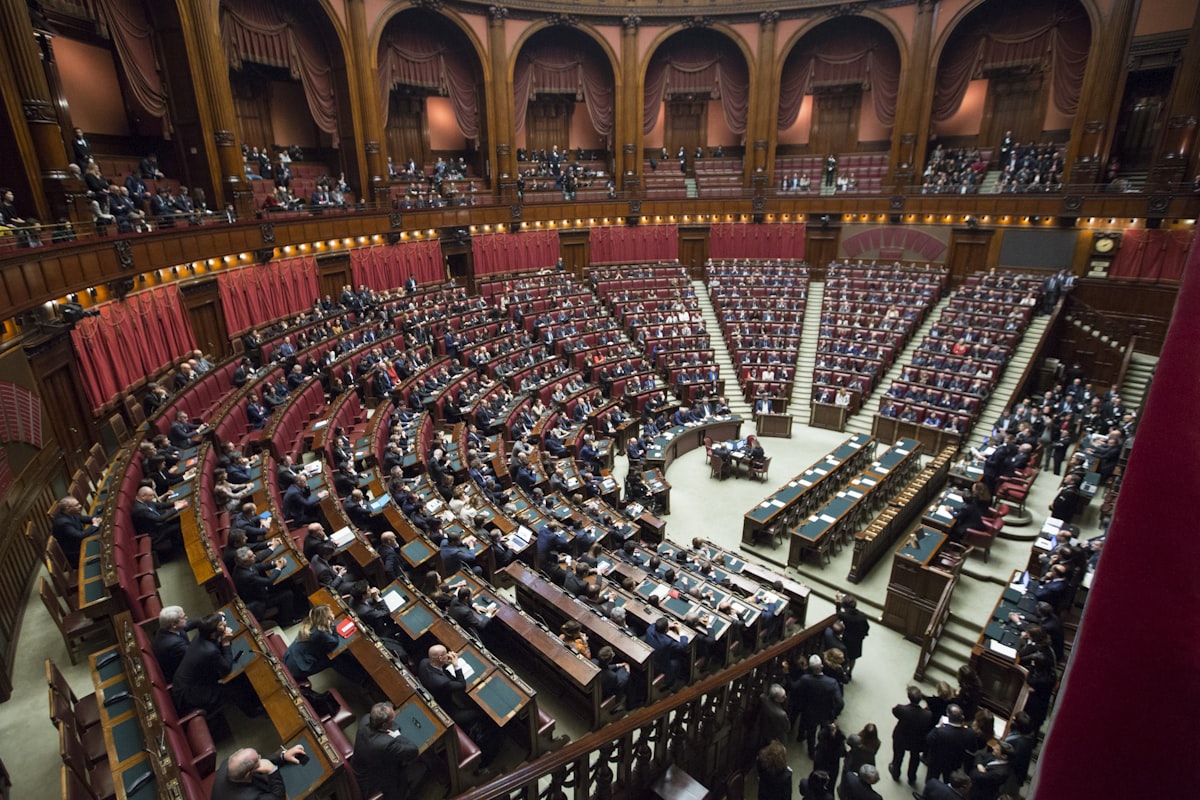
On Wednesday, February 4, EU ambassadors meeting in Brussels finally hammered out the details of what European Council President Antonio Costa diplomatically called a "historic commitment to Ukraine's future." The rest of us might call it the biggest European checkbook moment since the COVID recovery fund, complete with all the inter-governmental drama that implies.
The headline number is €90 billion in loans, split between €30 billion for budget support and €60 billion for defense. Ukraine will use this money to keep its government functioning and its military fighting, presumably in that order of importance to Brussels bureaucrats and the reverse order of importance to Ukrainians dodging Russian missiles.
The French Get Their Way (Again)
The most contentious part of the negotiations had nothing to do with helping Ukraine and everything to do with who gets to profit from helping Ukraine. France, led by its defense industry lobby and wrapped in the flag of European strategic autonomy, insisted that any weapons purchased with EU money should come from European manufacturers.
The final compromise reads like it was written by a committee of lawyers who could not agree on lunch, let alone defense procurement. Weapons "should in principle" be purchased from companies in the EU, Ukraine, or the European Economic Area countries. The phrase "in principle" is doing an enormous amount of heavy lifting in that sentence.
There are exceptions, of course. If Europe cannot produce what Ukraine needs, or if there is "urgent operational necessity," Kyiv can shop elsewhere. Air defense systems, ammunition for F-16s, and long-range strike capabilities are specifically mentioned as categories where non-European purchases might be acceptable. Given that Europe has spent the past three years proving it cannot produce enough artillery shells to keep up with Russian consumption, one suspects these exceptions will be invoked frequently.
Britain Pays the Price of Brexit
The United Kingdom finds itself in a particularly awkward position. British defense firms would very much like to sell weapons to Ukraine using EU money. The EU would very much like Britain to contribute to the interest payments on loans before British firms can participate. Brexit, it turns out, has consequences that extend beyond passport queues and fishing rights.
The compromise allows British participation, but only if London agrees to pay a "fair and proportionate financial contribution to the costs arising from borrowing." What constitutes fair and proportionate will be negotiated between the European Commission and the British government, which promises to be exactly as smooth as every other post-Brexit negotiation.
An EU official, speaking anonymously because discussing British contributions to European defense apparently requires diplomatic cover, noted that "getting the UK closer is better for Europe" both geopolitically and practically. The official might have added that watching Britain pay for the privilege of participating in something it could have helped design is also satisfying in ways that Brussels would never publicly admit.
The Opt-Out Club
Hungary, Slovakia, and the Czech Republic have declined to participate in the loan mechanism, exercising an opt-out that allows the remaining 24 member states to proceed through "enhanced cooperation." This is EU-speak for "we're doing this without you, but we're being polite about it."
Hungarian Prime Minister Viktor Orbán has made his position on Ukraine support abundantly clear: he is against it. Slovakia's government shares similar sentiments. The Czech opt-out is more surprising, given Prague's generally supportive stance toward Kyiv, and likely reflects domestic political calculations rather than principled opposition.
The absence of these three countries reduces the pool of guarantees backing the EU's borrowing, but not enough to derail the initiative. The remaining 24 states represent more than enough economic weight to make the financial markets comfortable with European debt.
The Netherlands Steps Up
The Netherlands, despite its ongoing governmental transition and minority coalition drama, has committed to the loan program without hesitation. The incoming Jetten government has made clear that European defense and Ukraine support are priorities that transcend domestic political upheaval.
Dutch Finance Minister Eelco Heinen, who will continue in his role under the new cabinet, called the loan "an investment in European security that will pay dividends for generations." Whether those dividends are measured in strategic stability or in contracts for Dutch defense firms remains tactfully unspecified.
The €90 billion loan also strengthens the case for the Netherlands' ambitious defense spending plans. The new coalition agreement commits to raising defense spending to 3.5% of GDP, well above NATO's 2% target. Having a massive European defense procurement program to participate in makes that spending increase easier to justify to a skeptical public.
The Fine Print
Ukraine will only be required to repay the €90 billion after Russia agrees to pay war reparations. Given that Moscow has categorically rejected any discussion of reparations, this provision effectively converts the loan into a grant in all but name. The EU will roll over the debt indefinitely, or until someone figures out how to make Russia pay, whichever comes first.
The money comes with conditions, naturally. Ukraine must maintain its anti-corruption reforms, continue on its path toward EU membership, and generally behave in ways that Brussels considers appropriate for a country receiving this much European taxpayer backing. Any "regression" on these commitments could trigger suspension of aid.
The first disbursements are scheduled for early April, which means Ukraine should receive money before its financial reserves become critically depleted. The International Monetary Fund estimates Ukraine's funding needs for 2026-2027 at €135.7 billion, so the EU's €90 billion represents roughly two-thirds of the total requirement. The rest will need to come from other sources, assuming other sources can be found.
What It All Means
The €90 billion loan is the largest single financial commitment the EU has made to Ukraine since the Russian invasion began in February 2022. It represents a significant escalation of European support at a moment when American commitment to Ukraine's defense appears uncertain.
More importantly, it establishes a precedent for European collective action on defense that would have been unthinkable five years ago. The EU borrowing money on capital markets to fund weapons purchases for a non-member state engaged in a hot war with Russia is not something that appears in any of the founding treaties.
For Ukraine, the loan provides breathing room at a critical moment. The country has burned through enormous resources fighting a larger adversary for nearly three years. Having guaranteed funding for the next two years allows for medium-term planning that was previously impossible.
For Europe, the loan is both an investment and a test. Can the EU actually function as a security actor, or will it remain forever dependent on American leadership? The €90 billion is Brussels' most expensive answer yet to that question.
The European Parliament still needs to approve the final package, but given the body's track record on Ukraine support, this is considered a formality. By April, European money should be flowing to Kyiv, European defense firms should be ramping up production, and European diplomats should be congratulating themselves on a job well done.
Whether the job is actually done well will depend on factors that no amount of European coordination can control. Russia still has to be defeated, or at least convinced to stop fighting. Ukraine still has to survive. And Europe still has to maintain its unity in the face of what promises to be a long and difficult struggle.
Ninety billion euros buys a lot of commitment. Whether it buys enough remains to be seen.
Share this article
Mr. Squorum
Editorial Team
Political analyst specializing in Dutch-EU relations and European affairs.
Related Articles

France Launches 'French Response' Initiative to Combat Disinformation on X and Social Media
France deployed rapid reaction teams to counter coordinated disinformation campaigns, with particular focus on Elon Musk's X platform. The initiative provides educational resources and counter-narratives while avoiding direct censorship.
5 min read
EU Unveils Plan to Counter Drone Threats Across the Bloc
The European Commission presented a 2.5 billion euro initiative to detect, track, and counter unauthorized drones across the EU. The plan responds to proliferating drone threats demonstrated in Ukraine and incidents at European airports and critical infrastructure.
5 min readComments (0)
Loading comments...