The Gulf Gambit: Europe Courts Petromonarchies While Lecturing Them on Values
The EU accelerates trade talks with Gulf monarchies after two decades of gridlock, exposing fundamental tensions between energy security and values-based diplomacy. For the Netherlands, Rotterdam's role as Europe's LNG gateway makes these negotiations particularly consequential.
The European Union is accelerating negotiations for a free trade agreement with the Gulf Cooperation Council, positioning 2026 as "the year of action" after two decades of stalled talks. But as Brussels courts wealthy Arab nations for energy diversification and market access, the negotiations expose a fundamental tension: how do you lecture trading partners about democracy and human rights while desperately needing their oil and gas?
Luigi Di Maio, the EU's special envoy to the Gulf, told Euronews this week that "it's high time to get a deal done." The sense of urgency is palpable. After securing major trade agreements with India, Mercosur countries, and Indonesia in a remarkable nine-month period, the EU is now focusing on the six-nation GCC bloc-Bahrain, Kuwait, Oman, Qatar, Saudi Arabia, and the United Arab Emirates.
The Netherlands Factor: Rotterdam's New Role
For the Netherlands, these negotiations carry particular weight. Rotterdam, Europe's largest port, has become a critical entry point for liquefied natural gas since the EU dramatically reduced Russian energy imports following Moscow's invasion of Ukraine. Dutch energy infrastructure-from LNG terminals to gas distribution networks-positions the country as a key gateway for Gulf energy reaching European markets.
The Netherlands imported €8.9 billion worth of goods from GCC countries in 2024, primarily petroleum products and chemicals. Meanwhile, Dutch exports to the region-dominated by machinery, transport equipment, and agricultural products-totaled €5.2 billion. A comprehensive free trade agreement could significantly expand this bilateral trade, particularly for Dutch high-tech sectors and advanced manufacturing.
Amsterdam's role as a financial hub also connects it to Gulf capital flows. Sovereign wealth funds from Abu Dhabi, Qatar, and Saudi Arabia have substantial investments in Dutch companies and infrastructure, creating financial interdependencies that extend beyond simple trade in goods.
Two Decades of Diplomatic Gridlock
The EU and GCC signed a cooperation agreement in 1988, but comprehensive trade talks have been frozen since 2008. The reasons for this protracted stalemate illuminate the fundamental challenges Europe now faces. Gulf states have consistently resisted European demands to include labor rights, climate commitments, and democratic governance standards in trade agreements-conditions Brussels considers non-negotiable.
Jasem Al Budaiwi, Secretary General of the GCC, made his position crystal clear at the World Governments Summit in Dubai this week. "When we discuss trade, we would like to discuss trade," he said, emphasizing that the Gulf wants to separate commercial agreements from political conditions. "To introduce other issues and put them on the table does not encourage us to move forward."
This is diplomatic language for a blunt message: stop making trade deals contingent on us changing our political systems. Al Budaiwi noted that the GCC has successfully concluded or advanced several trade agreements with other partners without non-trade clauses, pointedly contrasting those negotiations with the European approach.
The New Pragmatism
What's changed to make a deal potentially possible now? Geopolitics, primarily. The US under President Donald Trump has adopted an aggressively transactional approach to allies, threatening tariffs and demanding protection payments. This has forced Europe to diversify its economic partnerships urgently. The successful conclusion of the India agreement-described by the European Commission as the "mother of all deals"-demonstrated that Brussels can be flexible when strategic interests demand it.
Di Maio acknowledged the shift candidly. "Until three years ago, nothing relevant happened," he admitted. "Then, thanks to the leaders of the GCC, the member states in Europe, and the European Commission, something started to move." Over the past two years, the EU and GCC established annual foreign ministers' meetings, a Structural Security Dialogue, and an EU Chamber of Commerce in the Gulf-institutional mechanisms that signal seriousness.
The EU has also adopted a new strategy: bilateral deals alongside regional negotiations. In April 2025, the EU launched free trade agreement negotiations with the UAE specifically, with the first negotiating round completed in June. Brussels presents this UAE agreement as "a building block in view of the regional one"-essentially using Abu Dhabi as a template and pressure point for a broader GCC deal.
Energy Dependence vs. Values Diplomacy
The fundamental attraction for the EU is energy security. Most member states slashed their use of Russian gas and oil following the Ukraine invasion, creating an immediate need for alternative suppliers. Gulf nations, with their vast hydrocarbon reserves and expanding LNG export capacity, represent the most obvious replacement.
But this creates uncomfortable optics. The EU spent years developing a foreign policy framework built on "values-based" relationships, conditioning trade agreements on partners' commitment to democracy, human rights, and environmental standards. Now Brussels finds itself negotiating eagerly with absolute monarchies that restrict political freedoms, limit women's rights, and derive their wealth from the fossil fuels Europe claims to be phasing out.
The cognitive dissonance is striking. The same European Commission that lectures Hungary and Poland about rule of law is preparing to sign a comprehensive economic partnership with countries where political parties are banned, labor unions don't exist, and LGBT rights are criminalized. The same EU that demands Mercosur countries commit to Amazon rainforest protection is courting nations whose entire economic model depends on extracting and selling hydrocarbons.
The Netherlands' Delicate Position
For the Netherlands, this tension is particularly acute. The Dutch government has positioned itself as a champion of human rights in foreign policy, regularly criticizing countries over democratic backsliding. Foreign Minister Caspar Van Weel has emphasized that trade policy must reflect European values. Yet the Netherlands' own energy security depends increasingly on Gulf gas imports.
This creates a domestic political challenge. How does a Dutch government explain to voters that it's signing a trade agreement with countries whose human rights records it regularly condemns? The answer, it seems, is to emphasize "engagement" and "dialogue" as vehicles for gradual reform-the same argument that was used to justify deep economic ties with Russia before the Ukraine invasion exposed that strategy's failures.
Dutch businesses are enthusiastic about expanded Gulf access. The Netherlands-Qatar Chamber of Commerce has been lobbying for years for reduced trade barriers. Dutch engineering firms see opportunities in Gulf infrastructure projects, particularly as these countries diversify their economies beyond oil. Port of Rotterdam wants to cement its position as Europe's primary LNG import terminal.
The 50-50 Proposition
Al Budaiwi described the chances of reaching a GCC-EU free trade agreement in 2026 as "50-50," suggesting negotiations remain difficult despite the renewed momentum. Trade between the two sides reached $197 billion in 2024-about 12% of the GCC's total trade. Al Budaiwi projected this could rise to $300 billion within three to four years if tariffs were lowered and services facilitated under an agreement.
For context, EU exports to the Gulf region totaled €99.4 billion in 2024, dominated by machinery, chemicals, and transport equipment. Two-way trade in services amounted to €75.2 billion. Total EU investment stock in the GCC reached €235.9 billion, while Gulf investment in Europe totaled €215.2 billion. These are substantial economic relationships that both sides have clear interests in expanding.
Di Maio emphasized that the UAE bilateral deal is proceeding quickly, with both sides aiming to capitalize on existing momentum. "Along this corridor, Europe, Middle East, India, I think we will need the future of our economic relations," he stated, linking Gulf access to the broader Indo-Pacific strategy.
The Realpolitik Trap
What Europe is discovering-again-is that geopolitical realities and ideological preferences don't always align. The EU's "values-based foreign policy" worked reasonably well when Europe was economically secure and relatively insulated from global energy price shocks. But Russian gas cutoffs, American unreliability, and rising competition with China have forced a more transactional approach.
The risk is not just hypocrisy-though there's plenty of that. It's that once you abandon consistent principles for expedient deals, you lose the moral authority to demand better behavior from anyone. If the EU is willing to overlook Gulf autocracy for energy security, why should it expect other countries to take its human rights criticism seriously?
For the Netherlands specifically, the challenge is maintaining credibility in international forums while pursuing economic relationships that contradict stated values. Dutch politicians like to present their country as a bridge-builder, a nation that can engage constructively with difficult partners. But there's a fine line between pragmatic engagement and opportunistic compromise.
As these negotiations proceed through 2026, expect European officials to emphasize the economic benefits while quietly downplaying the political concessions. They'll talk about "constructive dialogue" on human rights while signing agreements that make no meaningful demands for reform. They'll highlight renewable energy cooperation while securing long-term LNG supply contracts.
Whether this represents mature realpolitik or cynical opportunism depends largely on your perspective. What's undeniable is that Europe's "year of action" on Gulf trade represents a significant recalibration of how the EU balances its economic interests against its stated values. The Netherlands, with its pivotal role in European energy infrastructure and its vocal commitment to human rights, embodies this tension more clearly than most.
Share this article
Mr. Squorum
Political Analyst
Political analyst specializing in Dutch-EU relations and European affairs.
Related Articles
France Launches 'French Response' Initiative to Combat Disinformation on X and Social Media
France deployed rapid reaction teams to counter coordinated disinformation campaigns, with particular focus on Elon Musk's X platform. The initiative provides educational resources and counter-narratives while avoiding direct censorship.
5 min read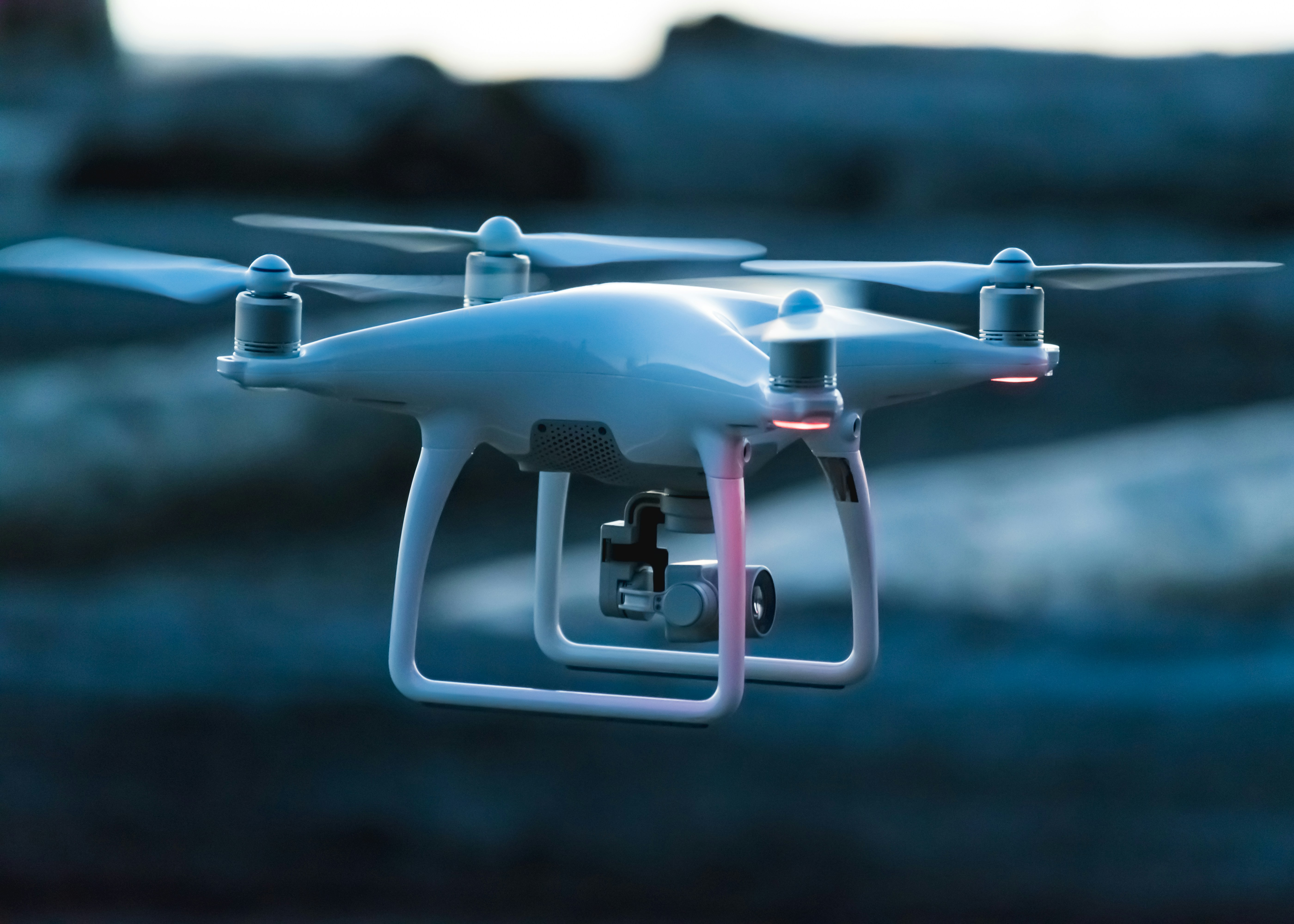
EU Unveils Plan to Counter Drone Threats Across the Bloc
The European Commission presented a 2.5 billion euro initiative to detect, track, and counter unauthorized drones across the EU. The plan responds to proliferating drone threats demonstrated in Ukraine and incidents at European airports and critical infrastructure.
5 min readComments (0)
Loading comments...