Germany's Offshore Wind Revolution: Hamburg Leads €50 Billion North Sea Expansion
As Europe races to meet its 2030 climate targets, Germany is betting big on the North Sea. Very big.
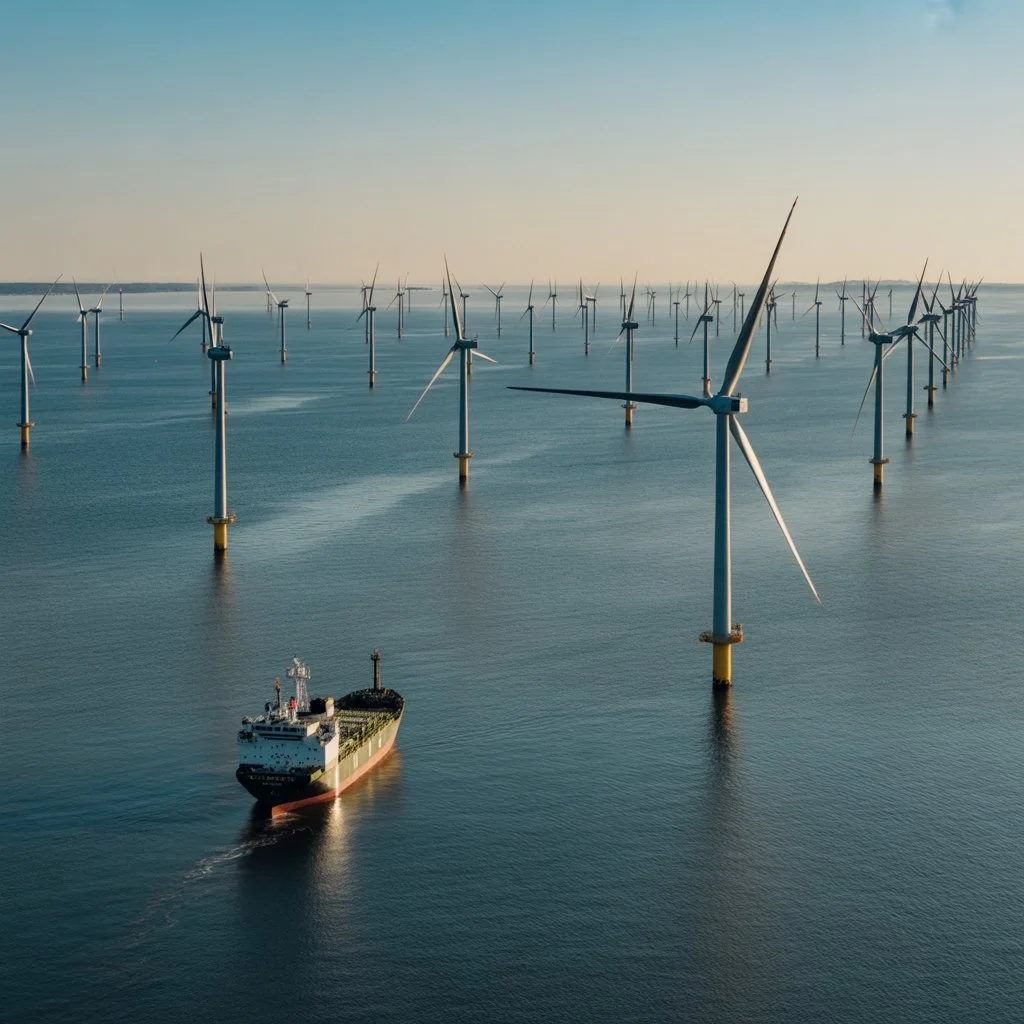
There is something almost poetic about the timing. Just days after Donald Trump stood at the World Economic Forum in Davos and declared that countries investing in wind power were "losers," ten European nations gathered in Hamburg to sign the largest offshore wind agreement in history. The Hamburg Declaration commits Belgium, Denmark, France, Germany, Iceland, Ireland, Luxembourg, the Netherlands, Norway, and the United Kingdom to delivering 100 gigawatts of joint offshore wind projects by 2050 - enough to power 143 million homes.
The message could not be clearer: Europe has decided which side of history it wants to be on, and it's the side with the wind at its back.
The Numbers That Matter
Let us dispense with the pleasantries and examine what this declaration actually entails. The €9.5 billion investment pact aims to mobilize €1 trillion of capital in Europe over the next quarter century. It promises to create more than 90,000 jobs and reduce power production costs by 30 percent within fifteen years. The North Sea, long associated with oil platforms and gas pipelines, is to become what German Chancellor Friedrich Merz calls "the largest reservoir of clean energy in the world."
Hamburg Declaration: Key Figures
- 100 GW of offshore wind through joint cross-border projects
- €9.5 billion initial investment pact
- €1 trillion total capital mobilization target
- 143 million homes could be powered
- 90,000+ jobs expected to be created
- 30% reduction in power production costs by 2040
- 10 countries committed to the declaration
For the Netherlands, this is particularly significant. Dutch energy storage levels have dropped to just 31.1 percent - among the lowest in Europe - as a cold winter drains reserves. The country sourced 27 percent of its gas and LNG imports from the United States in 2025, up from 6 percent in 2021, exposing it to the very supply disruptions that occurred during last week's Arctic blast in North America. Energy independence is no longer an abstract goal; it is an immediate necessity.
The Dutch Stake
The Netherlands has positioned itself as a central node in this emerging North Sea energy grid. National Grid and Dutch network operator TenneT are already developing LionLink, an offshore hybrid asset that will connect wind farms directly to multiple countries via undersea interconnectors. The project exemplifies the declaration's ambition: rather than each country building isolated wind farms, the North Sea will become an integrated energy system where surplus power flows to wherever it's needed.
This is, in principle, exactly what economists have long recommended. Interconnected grids reduce vulnerability to local supply disruptions, smooth out the intermittency of renewable sources, and create markets large enough to justify massive infrastructure investments. It is also, in practice, fiendishly complicated. Regulatory frameworks must be harmonized. Cost-sharing mechanisms must be negotiated. Environmental assessments must be coordinated across national boundaries. And all of this must be done while protecting critical infrastructure from what the declaration euphemistically calls "malign actors."
"By planning expansion, grids and industry together and implementing them across borders, we are creating clean and affordable energy, strengthening our industrial base and increasing Europe's strategic sovereignty."
- Katherina Reiche, German Minister of Economic Affairs and Energy
The Security Dimension
That last point deserves emphasis. NATO representatives attended the Hamburg summit for the first time, reflecting a growing recognition that energy infrastructure has become a front line in hybrid warfare. Earlier this month, 45,000 homes in Berlin were left without power for multiple days after an arson attack on electrical substations. Subsea cables have been mysteriously damaged in the Baltic Sea. The Nordstream pipeline sabotage remains officially unsolved.
The declaration commits signatories to exchange security-related data, stress-test components in wind turbines, and coordinate responses to physical and cyber threats. This is the reality of European energy policy in 2026: building wind farms is not just about reducing emissions, but about reducing dependence on actors who have demonstrated willingness to weaponize energy supplies.
Meanwhile, in Davos...
"Countries investing in wind are losers. Their 'windmill' numbers are in inverse proportion to their wealth."
- Donald Trump, January 2026
It is worth pausing to consider the intellectual coherence of Trump's position. The United States in 2025 exported 27 percent of Europe's gas and LNG imports. American energy companies profit enormously from European dependence on fossil fuels. European investment in wind energy directly threatens this revenue stream. Trump's dismissal of wind power is not economic analysis; it is protection of American gas exports dressed up as concern for European prosperity.
The Skeptics' Chorus
Not everyone is celebrating the Hamburg Declaration. Claire Countinho, the UK's shadow Secretary for Energy Security, warned that "the rush to build wind farms at breakneck speed is pushing up everybody's energy bills." This is a curious argument. European electricity prices have been volatile precisely because of dependence on fossil fuels whose prices fluctuate with geopolitical events. The entire point of the declaration is to escape what UK Energy Secretary Ed Miliband called "the fossil fuel roller coaster."
There are legitimate concerns about implementation. Building 100 gigawatts of offshore capacity requires specialized labor, port infrastructure, and manufacturing capacity at unprecedented scale. Environmental assessments will be contentious. The timeline is ambitious. But these are challenges of execution, not of direction.
The European Bet
What the Hamburg Declaration represents is a collective bet on a particular vision of the future. Europe is wagering that renewable energy will be cheaper, more secure, and more sustainable than fossil fuels. It is betting that coordinated action will deliver results that no country could achieve alone.
The alternative bet - the one Trump appears to be making - is that fossil fuels will remain dominant and that American energy exports should continue to flow across the Atlantic indefinitely. This is a bet against physics, economics, and the preferences of America's closest allies.
In three years, North Sea nations will meet again to assess progress. Wind farms will be under construction or they won't. Interconnectors will be laid or they won't. Ten countries have chosen their side. The wind is blowing in a particular direction. The question is whether everyone else will follow - or be left behind, clutching their gas contracts.
Share this article
Mr. Squorum
Political Analyst
Political analyst specializing in Dutch-EU relations and European affairs.
Related Articles

German-Turkish Director Ilker Catak Wins Golden Bear at Berlinale for Political Drama Yellow Letters
The 76th Berlin Film Festival concludes with politically charged ceremony as Yellow Letters takes top prize and Sandra Huller wins Best Performance for Rose.
4 min read
Slovakia Threatens to Cut Electricity Supply to Ukraine as Fico Escalates Energy Dispute
Slovak Prime Minister announces plans to halt electricity transmission to Ukraine from Monday, escalating tensions with Kyiv over energy transit issues.
4 min readComments (0)
Loading comments...