Keep On Dreaming: Rutte's Brutal Wake-Up Call for European Defense
The former Dutch Prime Minister tells EU lawmakers that without America, Europe is nothing but a continent of expensive wishful thinking.
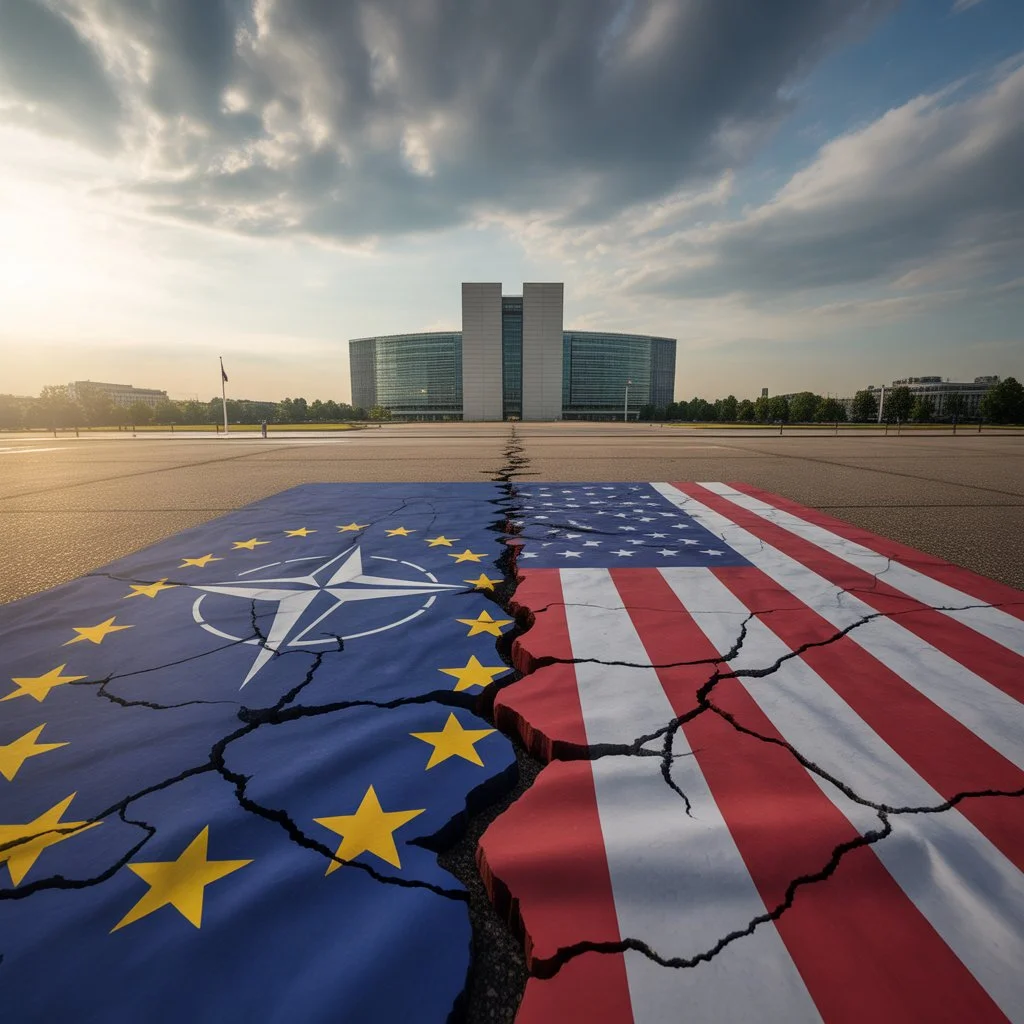
In a performance that combined the diplomatic finesse of a freight train with the subtlety of a sledgehammer, NATO Secretary General Mark Rutte stood before the European Parliament yesterday and delivered a message that Europe desperately needed to hear but absolutely did not want to: you cannot defend yourselves, and pretending otherwise is dangerous fantasy.
"If anyone thinks here that the European Union, or Europe as a whole, can defend itself without the US, keep on dreaming. You can't. We can't. We need each other." The words hung in the Brussels air like a particularly unwelcome house guest who has just pointed out that the emperor is, in fact, entirely naked. The assembled MEPs shifted uncomfortably in their seats, presumably contemplating whether "strategic autonomy" might be a French phrase for "expensive hallucination."
The former Dutch Prime Minister, who spent fourteen years navigating the treacherous waters of Dutch coalition politics before ascending to NATO's top job, has never been one to sugarcoat uncomfortable truths. But even by Rutte's standards, Monday's address was remarkably blunt. Europe, he explained with the patience of a teacher addressing particularly slow students, would need to spend not 5% but 10% of GDP on defense if it wanted to go it alone. Oh, and it would need to develop its own nuclear capability. That's billions of euros. "In that scenario," Rutte added, presumably with the ghost of a smile, "you would lose the ultimate guarantor of our freedom, which is the US nuclear umbrella. So, hey, good luck!"
The Trump Rehabilitation Tour
What made Rutte's appearance particularly fascinating was his full-throated defense of Donald Trump, a position roughly as popular in the European Parliament as suggesting that perhaps the French don't actually make the best wine. "I'm not popular with you now because I'm defending Donald Trump," Rutte acknowledged, displaying the self-awareness that comes from a career in Dutch politics, "but I really believe you can be happy that he is there because he has forced us in Europe to step up."
The arithmetic is indeed difficult to dispute. When Trump first started demanding that NATO allies meet their 2% spending commitments in 2017, European defense ministries reacted with the enthusiasm of students being told their homework was due earlier than expected. Now, in 2026, all NATO members have reached that threshold. At The Hague summit last July, they agreed to an eye-watering 5% target by 2035, 3.5% on core defense spending and 1.5% on security-related infrastructure. None of this, Rutte argued, would have happened without Trump's particular brand of diplomatic pressure, which might be described as "threatening your allies until they do what you want."
THE NUMBERS GAME: EUROPEAN DEFENSE SPENDING
- Current NATO target: 5% of GDP by 2035 (3.5% defense + 1.5% infrastructure)
- Rutte's estimate for autonomy: 10% of GDP + own nuclear capability
- Russia's current spending: ~9% of GDP (war economy)
- US spending: ~3.4% of GDP ($967 billion in 2024)
- EU-27 combined: Still less than Russia in purchasing power terms
The Greenland Gambit
Rutte's defense of Trump comes at a peculiar moment in transatlantic relations. Just last week, the American president was threatening to annex Greenland and slapping tariff threats on any European nation that objected. Then, following a meeting with Rutte in Davos, Trump suddenly announced a "framework" for a deal and dropped his tariff threats. The details of this framework remain mysteriously vague, rather like a magician who has performed a trick but declines to explain how it was done.
What we do know is that two "work streams" have been agreed. The first involves NATO taking more responsibility for Arctic defense, a tacit acknowledgment that Trump's concerns about Russian and Chinese activity in the region are not entirely paranoid fever dreams. The second involves direct talks between Washington, Copenhagen, and Nuuk. Rutte, ever the pragmatist, has made clear he has no mandate to negotiate on Denmark's behalf. The Danes, one suspects, are relieved.
The Dutch Connection
Mark Rutte's journey from Binnenhof to Brussels headquarters represents a peculiarly Dutch approach to power: influence through indispensability rather than confrontation. The Netherlands has committed to increasing its defense budget to €26.8 billion in 2026, a €3.4 billion increase that Defense Minister Ruben Brekelmans announced on Prince's Day. Dutch defense spending has jumped from roughly 1.5% of GDP to over 2%, with the target now set at reaching €30 billion by 2029. For a country that spent decades treating its armed forces as a jobs program for people who looked good in parades, this represents a genuine revolution in thinking.
The French Exception
Not everyone in Brussels appreciated Rutte's wake-up call. France, which has led calls for European "strategic autonomy" since approximately the founding of the Fifth Republic, bristled at the suggestion that such autonomy is impossible. President Macron has repeatedly argued that Europe must develop the capacity to defend itself, pointing to France's own nuclear deterrent as proof that the continent is not entirely helpless.
"I would rather say Rutte should stop dreaming that the US is willing to defend Europe and is a reliable partner to do so," retorted Gesine Weber, a researcher at ETH Zürich. "Europeans are not dreaming about that, they are assessing how to make it reality because there's no other option." Max Bergmann of the Center for Strategic & International Studies was more blunt: Rutte's comments were "absurd" and "willfully blind: the US ain't coming to defend Europe."
Here lies the fundamental disagreement at the heart of European defense policy. Rutte argues that attempting to build a separate European defense pillar would create "duplication" that "Putin will love." The French and their allies counter that relying on an America led by a president who threatens to annex allied territory is itself a form of strategic insanity.
The Uncomfortable Truth
What neither side particularly wants to admit is that both arguments contain uncomfortable truths. Europe cannot currently defend itself without American support, the industrial capacity, the nuclear umbrella, the airlift capabilities, the satellite networks simply do not exist on this side of the Atlantic. But equally, an America that treats Greenland as a real estate opportunity and threatens tariffs on allies is not the reliable partner that Article 5 was designed around.
Rutte's "keep on dreaming" may be rhetorically effective, but it sidesteps the question of what happens when the dreamer is the only one at the wheel. Europe is waking up, the defense spending increases are real, the industrial investments are happening, the political will is slowly materializing. The question is whether it is waking up fast enough, and whether the transatlantic relationship can survive long enough for that awakening to matter.
In the meantime, the former Prime Minister of the Netherlands will continue doing what Dutch politicians have always done best: telling uncomfortable truths with a smile, while quietly ensuring their country remains indispensable to everyone involved. Some things, at least, never change.
Share this article
Mr. Squorum
Political Analyst
Political analyst specializing in Dutch-EU relations and European affairs.
Related Articles

German-Turkish Director Ilker Catak Wins Golden Bear at Berlinale for Political Drama Yellow Letters
The 76th Berlin Film Festival concludes with politically charged ceremony as Yellow Letters takes top prize and Sandra Huller wins Best Performance for Rose.
4 min read
Slovakia Threatens to Cut Electricity Supply to Ukraine as Fico Escalates Energy Dispute
Slovak Prime Minister announces plans to halt electricity transmission to Ukraine from Monday, escalating tensions with Kyiv over energy transit issues.
4 min readComments (0)
Loading comments...