The Dutch Asylum "Crisis": A Political Fiction Built on 12.5% of Immigration
The Netherlands is passing emergency laws to solve a crisis that doesn't exist in the data. Meanwhile, the actual problem, a 390,000 home housing shortage, gets ignored. Here's what's really going on.
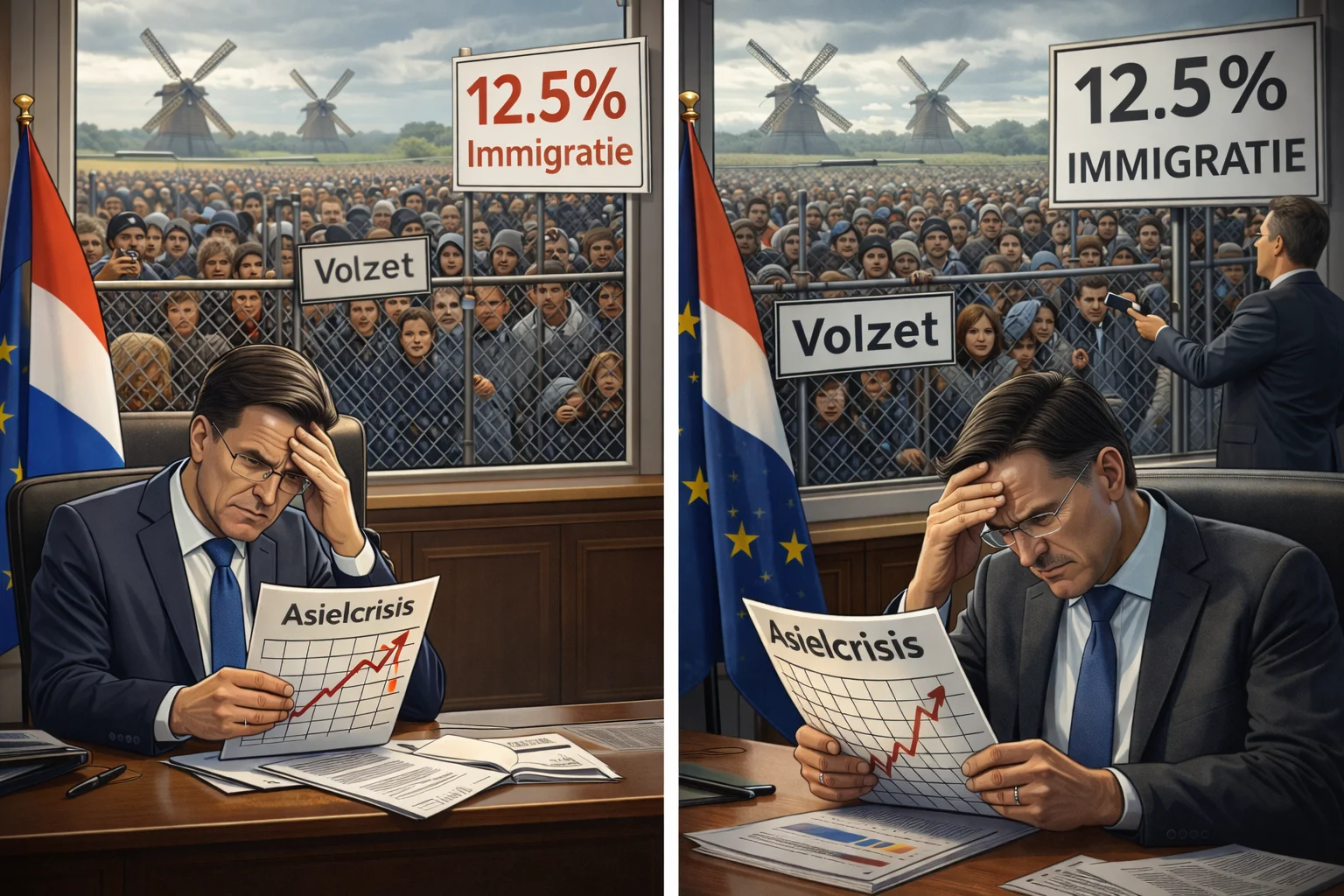
I've spent years watching European governments manufacture crises. But the Netherlands has turned it into an art form.
Last Tuesday, 125,000 people signed a petition against the government's new asylum laws. The same day, senators received a technical briefing on legislation that's supposed to solve the Netherlands' "asylum emergency."
Here's my question: what emergency?
Because I've looked at the numbers. I've read the expert reports. I've followed every parliamentary debate. And I still can't find this crisis everyone keeps talking about.
Let me show you what I mean.
The Numbers That Destroy the Narrative
The Dutch government keeps saying there's an asylum crisis.
In 2024, 32,175 people applied for asylum in the Netherlands. That's fewer than the year before, 38,377 in 2023. The numbers are going down, not up.
Down. Not up. Let that sink in.
But here's the stat that should end this debate entirely: asylum seekers are just 12.5% of total immigration to the Netherlands.
Twelve and a half percent.
The other 87.5%? Labour migrants. International students. Expats. Family reunification. Knowledge workers at ASML. Nobody seems worried about them. No emergency laws. No petitions. No breathless news coverage.
When you look at asylum applications per capita, the Netherlands ranks 15th in Europe. Fifteenth. We receive about 2 applications per 1,000 inhabitants, literally the EU average.
So we're average. And declining. And this is a crisis?
I'll let you decide what's really going on here.
The Actual Problem Nobody Wants to Discuss
Walk into any Dutch asylum centre right now and you'll notice something that completely undermines the political narrative. About half the people there aren't waiting for their asylum decision. They already got approved. They have residence permits. They're legally entitled to housing.
They're just stuck because there's nowhere to go.
The numbers are damning: out of 72,504 people in COA reception facilities, around 20,360 already have their papers. That's 28% of the system clogged up by people who aren't asylum seekers anymore, they're refugees waiting for an apartment that doesn't exist.
Twenty-eight percent. Stuck. Not because of asylum policy. Because of housing policy.
The Netherlands has a housing shortage of roughly 390,000 homes. That's been building for decades. Governments didn't build enough, didn't invest enough, didn't plan ahead. Now there's a crunch, and suddenly asylum seekers, 12.5% of immigration, remember, are the problem.
That's not crisis management. That's scapegoating.
Laws That Won't Work (And Everyone Knows It)
The Schoof cabinet is pushing through three asylum laws right now. They all passed the Tweede Kamer last year. They're sitting in the Senate waiting for a vote.
The first one, the Asielnoodmaatregelenwet, cuts asylum permits from 5 years to 3, scraps permanent residence entirely, and restricts family reunification. The vote was 94-56 back in July.
The second creates two categories of refugees. "Real" refugees get full rights. People fleeing war but not personal persecution get a lesser status with fewer protections.
The third? Scrapping the Spreidingswet, the law that requires municipalities to share responsibility for asylum reception.
Strong action. Decisive leadership. Solving the crisis.
Except for one small problem: everyone who actually runs the asylum system says these laws will make things worse.
The IND, the immigration service, said the speed of these reforms creates "unprecedented challenges." Their own assessment shows the new laws will generate more work, not less.
The COA, the reception agency, expects people to stay longer in facilities, not leave faster. Why? Because the two-tier system will trigger more appeals, more legal challenges, more people stuck in limbo while courts sort it out.
The police weren't even consulted on the two-status system. They've said they have "concerns about implementation."
The VNG, the association of Dutch municipalities, called the legislation "unworkable."
The Council of State warned that the Netherlands is choosing to go beyond EU minimum standards, adding extra complexity to an already strained system.
So let me get this straight: the immigration service says it won't work. The reception agency says it won't work. The police have concerns. The municipalities say it's unworkable. The Council of State has legal doubts.
And we're passing these laws anyway.
Make it make sense.
The European Absurdity
This is where it gets almost funny. Almost.
In September 2024, Minister Faber formally asked the EU for an opt-out from asylum rules. "We need to be in charge of our own asylum policy again," she declared.
Everyone knew this was legally impossible. An opt-out would require changing EU treaties with unanimous consent from all 27 member states. Poland wasn't going to agree. Hungary wasn't going to agree. Nobody was going to agree.
It was theatre. Pure political theatre.
And here's the punchline: while asking for an opt-out from EU rules, the Netherlands is actively implementing the EU Migration Pact it supposedly wanted to opt out of. The implementation law was submitted to parliament in December. The deadline is June 2026.
Better still: the government announced it will pay into the EU's solidarity pool rather than accept relocated refugees. So we asked for an opt-out, didn't get it, are now implementing the rules, and are paying into the system we claimed to reject.
This isn't policy. It's performance art.
What Would Actually Work
If the goal is genuinely to reduce pressure on the asylum system, and not just to score political points, here's what would help:
Process cases faster. The IND has a backlog of tens of thousands. People wait months, sometimes years, for a decision. All that time they're in reception. Speed up decisions, free up space. Radical idea, I know.
Build more houses. Every statushouder stuck in an asylum centre is a bed that's unavailable for a new arrival. The housing shortage is the bottleneck. But building houses doesn't fit on a campaign poster as well as "stop the asylum crisis."
Improve return agreements. About 30% of rejected asylum seekers actually leave. Without functioning return policies, rejection doesn't mean departure. But return agreements require diplomacy, patience, and sustained effort, none of which generate headlines.
Take the EU Pact seriously. The new border procedures and solidarity mechanisms could help, if implemented properly instead of grudgingly while publicly claiming to reject them.
None of this is easy. But restricting family reunification for unmarried partners isn't going to solve a 390,000-home housing deficit.
That's not policy analysis. That's basic arithmetic.
What Happens Next
The Senate is expected to vote on these laws in the coming weeks. The coalition has a narrow path to majority, they need a few centrist votes to get there.
125,000 people signed a petition asking senators to reject these laws. Implementation experts have warned they'll make things worse. The Council of State has questioned their legality. The people who run the asylum system say they can't work.
Will it matter?
Probably not. The political incentives all point toward passage. Voting against "asylum crisis" legislation takes courage. Explaining that 12.5% of immigration isn't an existential threat takes nuance. Neither sells well.
The Uncomfortable Truth
Let me be direct about what we're watching: a country passing laws that won't solve the problems they claim to address, will create new problems that experts have clearly identified, and will face legal challenges that waste more time and money.
The "asylum crisis" framing has worked politically. It helped the PVV become the largest party. It shapes every policy debate. It wins elections.
But it's not accurate. The numbers don't support it. The experts don't believe it. And the laws it's producing won't fix it.
32,175 applications. Declining. 12.5% of immigration. 15th in Europe per capita. Literally average.
Some crisis.
The real crisis is 390,000 missing homes, decades of underinvestment, and a political system that would rather blame 12.5% of newcomers than admit it failed at basic urban planning.
But that's harder to fit on a campaign poster.
I keep waiting for someone in this debate to just say the obvious: you can't solve a housing crisis with asylum restrictions. You solve it by building houses. But I suspect I'll be waiting a long time. In the meantime, the Netherlands will pass its emergency laws, the experts will be proven right, and we'll do this all again in a few years. Maybe then someone will finally look at the actual numbers.
I would aslo like to clarify that the Netherlands is currently facing a nitrogen crisis caused by highly efficient agriculture. This crisis is preventing the government from building more homes to solve the housing crisis.
However, the last three governments have made no progress in resolving the nitrogen crisis. This means that they have all focused more on repeating the same research, setting up working groups, task forces, and ministerial teams, without coming up with a long-awaited solution.
Share this article
Mr. Squorum
Political Analyst
Political analyst specializing in Dutch-EU relations and European affairs.
Related Articles

German-Turkish Director Ilker Catak Wins Golden Bear at Berlinale for Political Drama Yellow Letters
The 76th Berlin Film Festival concludes with politically charged ceremony as Yellow Letters takes top prize and Sandra Huller wins Best Performance for Rose.
4 min read
Slovakia Threatens to Cut Electricity Supply to Ukraine as Fico Escalates Energy Dispute
Slovak Prime Minister announces plans to halt electricity transmission to Ukraine from Monday, escalating tensions with Kyiv over energy transit issues.
4 min readComments (0)
Loading comments...