The Art of the Framework: How Mark Rutte Sold Trump a Deal That Doesn't Exist
NATO's Secretary General managed to talk the American president out of trade war with Europe by offering him something called a 'framework.' Nobody is quite sure what that means, which appears to be the point.

In the annals of diplomatic creativity, the "Greenland Framework" of January 2026 deserves a special place. It is a deal that prevented a trade war, satisfied an American president obsessed with owning an Arctic island, and somehow managed to change absolutely nothing about the actual status of Greenland. If there were a Nobel Prize for diplomatic sleight of hand, NATO Secretary General Mark Rutte would be the frontrunner.
The background is by now familiar. President Donald Trump has spent weeks insisting that the United States must control Greenland, a semi-autonomous territory of Denmark. His justifications have ranged from the strategic (defending against Russia and China in the Arctic) to the bizarre (repeatedly referring to Greenland as "Iceland" during public remarks). When European leaders politely declined to hand over territory belonging to a NATO ally, Trump responded by threatening 10% tariffs on eight European countries, rising to 25% if they did not cooperate.
The Davos Intervention
Enter Mark Rutte, the former Dutch prime minister who became NATO's top official in late 2024. Rutte has a reputation for being able to talk to anyone, a skill he honed during years of managing fractious coalition governments in The Hague. At the World Economic Forum in Davos, he secured a meeting with Trump and emerged with what both men described as a "framework of a future deal."
What exactly does this framework contain? That depends on whom you ask. Trump claimed he would now have "total access" to Greenland. Rutte talked vaguely about enhanced security cooperation in the Arctic. Danish officials emphasized that sovereignty was never on the table. Greenland's prime minister said the territory's "red lines" remained intact.
The most honest assessment came from Ole Waever, a professor of international relations at the University of Copenhagen, who suggested the framework was essentially a "pretend deal" designed to give Trump a face-saving off-ramp from his self-created crisis.
What Actually Changed
The immediate practical effect of the framework was that Trump withdrew his tariff threats. The 10% levies scheduled for February 1 were cancelled. European businesses, which had been scrambling to assess the potential damage, breathed a collective sigh of relief. Stock markets rallied.
Beyond that, the substance is thin. NATO has agreed to "enhance" its presence in the Arctic, but this was already happening before the Greenland controversy erupted. Denmark has committed to increasing its military spending on Greenland, but again, these investments were already underway. Talks between the United States, Denmark, and Greenland will continue on issues like critical minerals and defense cooperation, but such talks were never really at risk of stopping.
The 1951 Defense Agreement between the United States and Denmark, which governs American military presence in Greenland including the crucial Pituffik Space Base, may be renegotiated to allow for expanded U.S. capabilities. This is perhaps the most concrete outcome of the whole affair, though it is hardly the acquisition of territory that Trump seemed to be demanding.
The European Reaction
In Brussels and European capitals, the response to the framework has been a mixture of relief and wariness. Relief that the immediate crisis has passed. Wariness because everyone understands that Trump's fundamental unpredictability remains unchanged.
German Chancellor Friedrich Merz, speaking in Davos, welcomed the "de-escalation" but urged Europeans not to be too quick to celebrate. "We support talks between Denmark, Greenland, and the United States on the basis of these principles," he said carefully, emphasizing the word "principles," which in diplomatic language means "respecting sovereignty."
The European Parliament has already signaled that it will not ratify the EU-US trade agreement concluded last summer while tensions over Greenland remain elevated. That deal, which was never popular in Europe to begin with, may now be permanently dead.
What Rutte Actually Achieved
From one perspective, Rutte pulled off a remarkable diplomatic feat. He gave Trump something to announce, a "framework" and a "concept of a deal," without actually conceding anything of substance. The American president can claim victory. European sovereignty remains intact. The tariffs are gone. Everyone walks away with something.
From another perspective, this episode reveals the fundamental fragility of the transatlantic relationship. The fact that the NATO Secretary General had to personally intervene to prevent the American president from starting a trade war with European allies over a territorial demand that was never going to be satisfied suggests that something has gone deeply wrong with how the alliance functions.
The Arctic security concerns that Trump raised are not entirely illegitimate. As sea ice melts, the region is becoming more accessible and more contested. Russia has been increasing its military presence there for years. China has declared itself a "near-Arctic state" and is investing heavily in polar research and infrastructure. A coordinated NATO response to these developments makes sense.
But that response was already happening through normal alliance mechanisms. It did not require presidential tantrums, tariff threats, or the diplomatic equivalent of a hostage negotiation at Davos.
The Lessons
What have European leaders learned from this episode? First, that Trump can be managed, at least temporarily, if you can find the right combination of flattery and face-saving gestures. Rutte seems to have cracked this code, at least for now.
Second, that the current American administration views allies not as partners but as entities to be pressured and coerced. This is not a new observation, but the Greenland affair has driven it home with particular force.
Third, that Europe needs to continue developing its own capacity for independent action. The EU-India trade deal, concluded the same week as the Greenland framework, is one example. Discussions about European defense autonomy are another. The days of assuming that American leadership will always be benevolent, or even coherent, are over.
Mark Rutte may have saved Europe from an unnecessary trade war this week. But he cannot be at every summit, managing every crisis, indefinitely. The framework he negotiated is a temporary fix to a permanent problem. Until that problem is addressed, Europeans will continue to live with the uncertainty of an unpredictable ally.
Share this article
Mr. Squorum
Political Analyst
Political analyst specializing in Dutch-EU relations and European affairs.
Related Articles
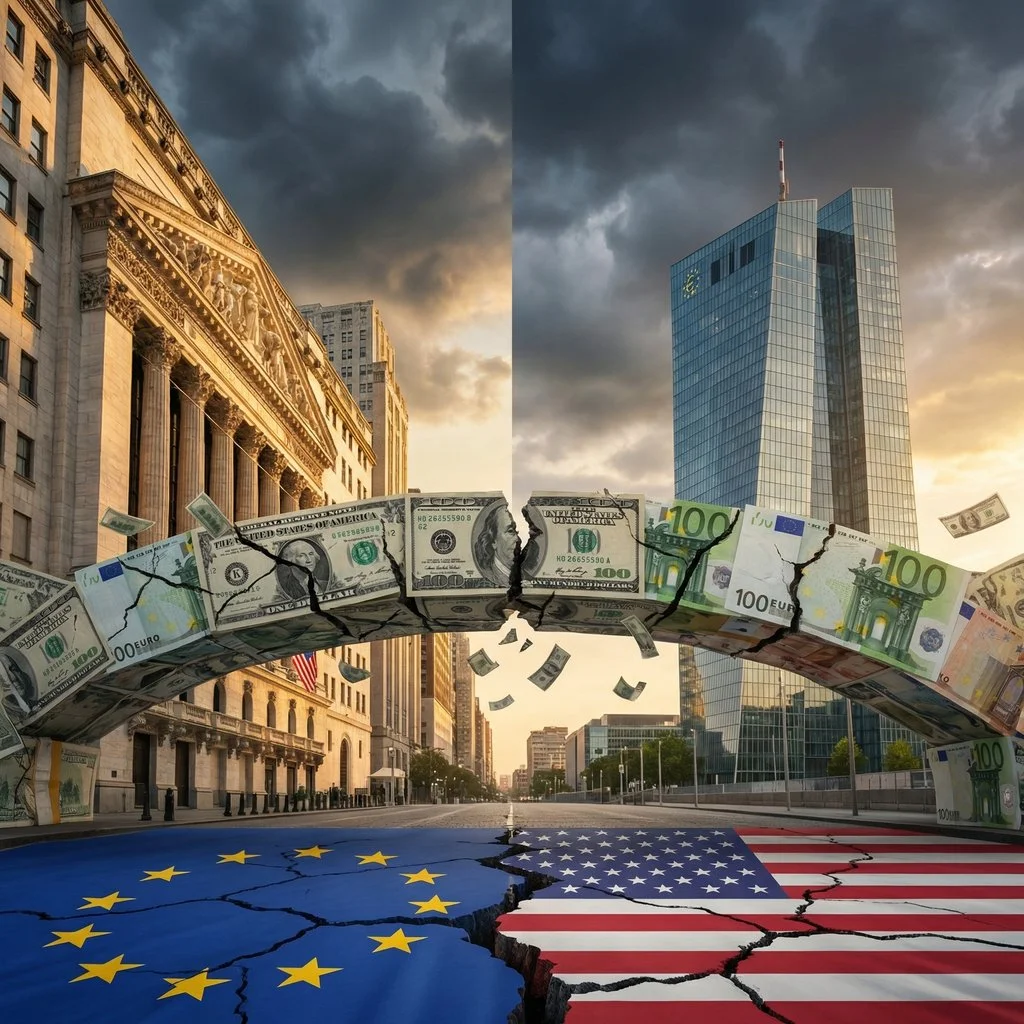
Sell America: Europe's Trump Card in the Transatlantic Trade War
As Trump threatens allies over Greenland, Europe quietly counts its financial weapons, including $10 trillion in Treasury bonds and a never-used "bazooka."
9 min read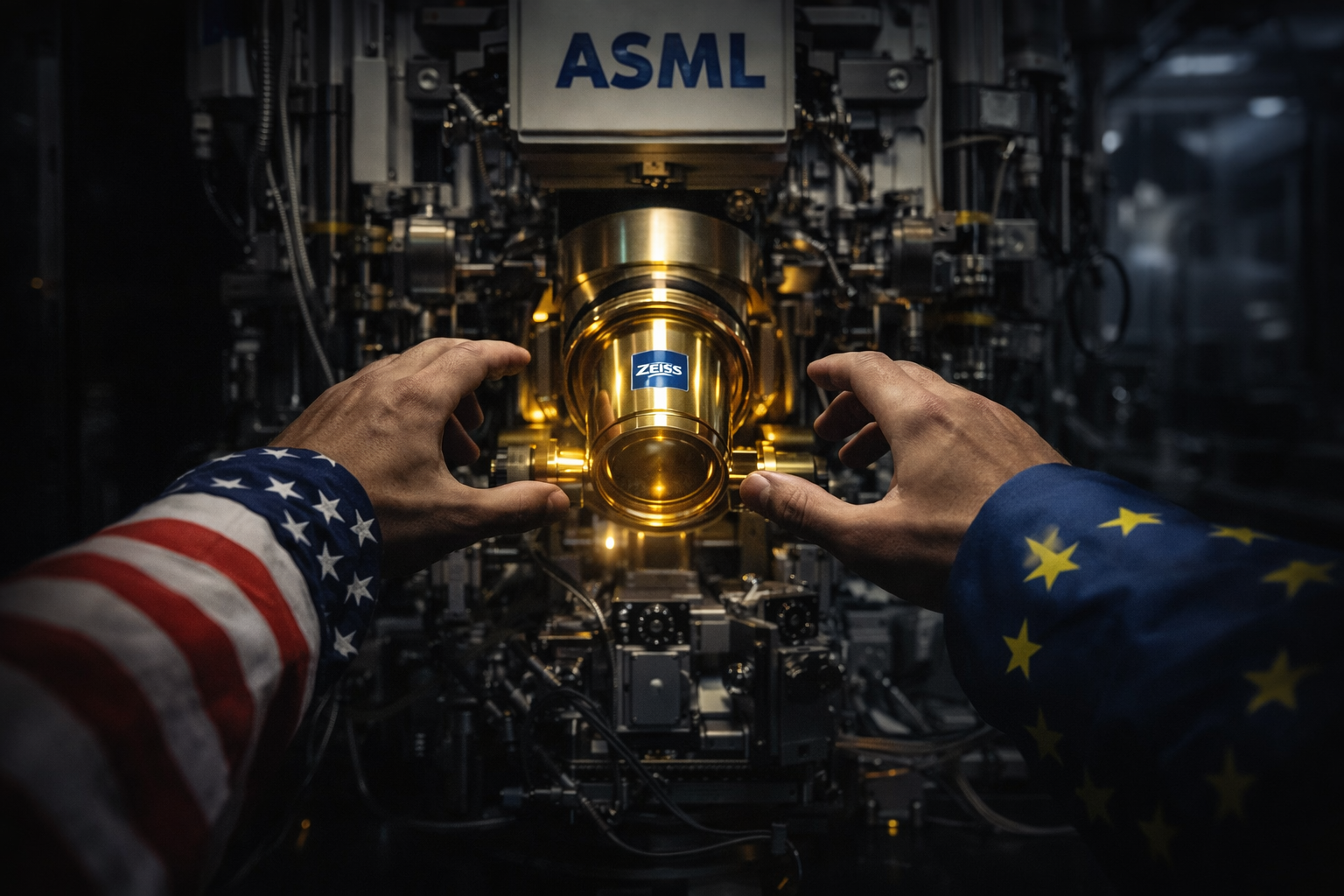
Europe's Nuclear Option: Could the Netherlands Weaponize ASML Against Washington?
A Dutch think tank proposes the unthinkable: using chip technology as leverage against America. It reveals both Europe's growing frustration and its limited options.
4 min readComments (0)
Loading comments...