The Week the Alliance Cracked: What Trump's Greenland Obsession Reveals About NATO's Future
I've been watching transatlantic relations for years. I thought I'd seen everything. Then this week happened, the most serious crisis in NATO's history since its founding.
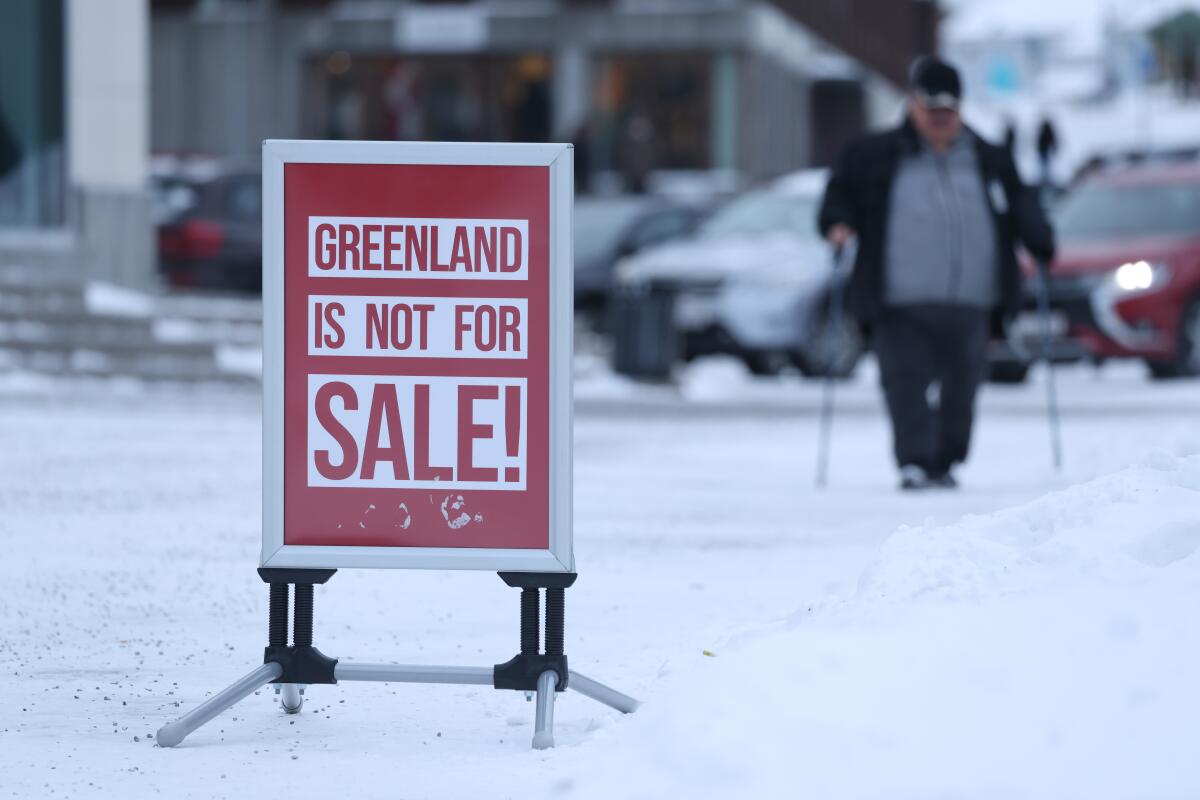
I've been watching transatlantic relations for years. I thought I'd seen everything. Then this week happened.
Let me walk you through what just unfolded,because if you blinked, you might have missed the most serious crisis in NATO's history since its founding.
Saturday: The Threat
On January 17th, Trump posted on Truth Social that eight European countries would face 10% tariffs starting February 1st, rising to 25% by June. The targets? Denmark, Norway, Sweden, France, Germany, the UK, the Netherlands, and Finland.
The reason wasn't trade deficits or unfair practices. It was Greenland. Trump wanted these countries to stop "interfering" with his plan to buy the Arctic island from Denmark.
Let that sink in. An American president threatened tariffs on allies, NATO allies, the countries that invoked Article 5 after 9/11, to force the sale of sovereign territory.
Sunday: Emergency Meetings
European diplomats scrambled. An emergency meeting convened in Brussels. France's finance minister said the EU "must be prepared" to use its Anti-Coercion Instrument, the so-called "trade bazooka" that's been sitting unused since 2023.
The eight targeted nations issued a joint statement: "We stand in full solidarity with Denmark and Greenland. We will not be blackmailed."
That word, blackmail, showed up in statements from Sweden, Germany, Norway, and the Netherlands. Usually diplomats avoid such language. Not this time.
Monday: Markets React
The Dow dropped 870 points when trading opened. Denmark started selling U.S. Treasury bonds. EU officials began discussing €93 billion in retaliatory tariffs that had been frozen after last summer's trade deal.
Trump doubled down, tweeting that he would impose 200% tariffs on French wine after Macron texted him that his Greenland obsession was "confusing."
Norwegian Prime Minister Jonas Gahr Støre revealed he'd received a bizarre message from Trump suggesting that Norway's failure to award him the Nobel Peace Prize was partly to blame for his aggressive stance.
I wish I was making this up.
Tuesday: The Trade Deal Dies
The European Parliament froze ratification of the EU-US trade deal, the same deal that von der Leyen and Trump had celebrated just six months earlier at his Scottish golf course.
"Until the US decides to re-engage on a path of cooperation rather than confrontation, no steps to move the deal forward would be taken," said Bernd Lange, chair of the Parliament's trade committee. "Our sovereignty and territorial integrity are at stake."
Meanwhile, Greenland's minister for business told CNBC that residents are "worried, afraid, bewildered." Recent polls show Greenlanders overwhelmingly oppose becoming American.
Wednesday: The U-Turn
Then came Davos.
Trump gave a rambling speech where he called Europe "unrecognizable" and demanded "immediate negotiations" on Greenland. He mocked Macron's sunglasses. He called Canada "ungrateful."
But buried in there was something significant: "I won't use force. I don't want to use force. I don't have to use force."
A Danish person sitting behind a CNBC reporter muttered: "This is ridiculous."
Hours later, after meeting with NATO Secretary-General Mark Rutte, Trump posted that they'd reached a "framework of a future deal" on Greenland and the Arctic. The tariffs were off.
No details on what this framework actually contains. Vice President Vance and Secretary of State Rubio will handle negotiations.
Danish Foreign Minister Lars Løkke Rasmussen's response was measured but firm: "We will never enter negotiations based on abandoning fundamental principles."
What Just Happened?
I've been trying to make sense of this week. Here's what I think matters:
First, the tariff threat was economic coercion, the exact scenario the EU's Anti-Coercion Instrument was designed for. The ACI was created in 2023 after China weaponized trade against Lithuania. It allows the EU to block access to its 450-million-consumer market, ban companies from public tenders, and restrict investment. France wanted to trigger it. Germany hesitated. In the end, they didn't have to decide.
Second, the transatlantic trade deal is effectively dead. Even if Trump's tariffs are off, the European Parliament won't forget this week. The trust required for complex trade negotiations doesn't survive territorial threats against member states.
Third, Europe showed unity, but also its limits. The joint statements were strong. The solidarity was real. But the EU's most powerful tool, the ACI, wasn't actually deployed. Some will call that wise restraint. Others will see it as another example of Europe refusing to play hardball.
Fourth, Trump got something. We don't know what's in the "framework," but Rutte clearly offered enough to satisfy him temporarily. Mineral rights? Enhanced Arctic cooperation? A face-saving formula? We'll find out.
The Bigger Picture
What troubles me isn't just this week. It's what it reveals about where we're headed.
Trump views alliances transactionally. He said it himself at Davos: America protected Greenland in World War II, so why can't we keep it? The idea that Denmark and Greenland have sovereign rights, that allies aren't assets to be acquired, doesn't compute.
Meanwhile, the European Union has tools it's afraid to use. The Anti-Coercion Instrument exists precisely for moments like this. But deploying it against America would cross a psychological barrier that European leaders aren't ready to cross.
And NATO? Mark Rutte is trying to hold things together, but his job is essentially impossible. How do you maintain a collective defense alliance when its largest member threatens tariffs on seven other members to acquire territory from an eighth?
The Greenland crisis has passed for now. But the underlying dynamic hasn't changed. An American president who sees European sovereignty as negotiable. A Europe that talks tough but pulls its punches. An alliance that everyone says they believe in but nobody quite trusts anymore.
We'll be back here again. Probably sooner than we think.
Share this article
Mr. Squorum
Political Analyst
Political analyst specializing in Dutch-EU relations and European affairs.
Related Articles

The Mother of All Deals: EU and India Forge Historic Trade Pact as Trump Watches from the Sidelines
After nearly two decades of on-and-off negotiations, the European Union and India have finally concluded a landmark free trade agreement. The timing, of course, is not coincidental.
6 min read
Brussels Crosses the Rubicon: EU Designates Iran's Revolutionary Guard as Terrorist Organisation
After years of hesitation, Europe's foreign ministers unanimously blacklist the IRGC following Tehran's bloody crackdown on protesters.
6 min readComments (0)
Loading comments...